
Hand an agent a goal
ios-agent "turn on bold text" and watch it work: reasoning, the screen it reads,
actions and cost, live in the terminal.
uv sync && uv run ios-agent quickstartuv run ios-agent "turn on bold text"{ "mcpServers": { "ios": { "command": "uv", "args": ["run", "--directory", ".", "ios-mcp", "serve"] } }}outcome = await run_goal(session, "turn on bold text")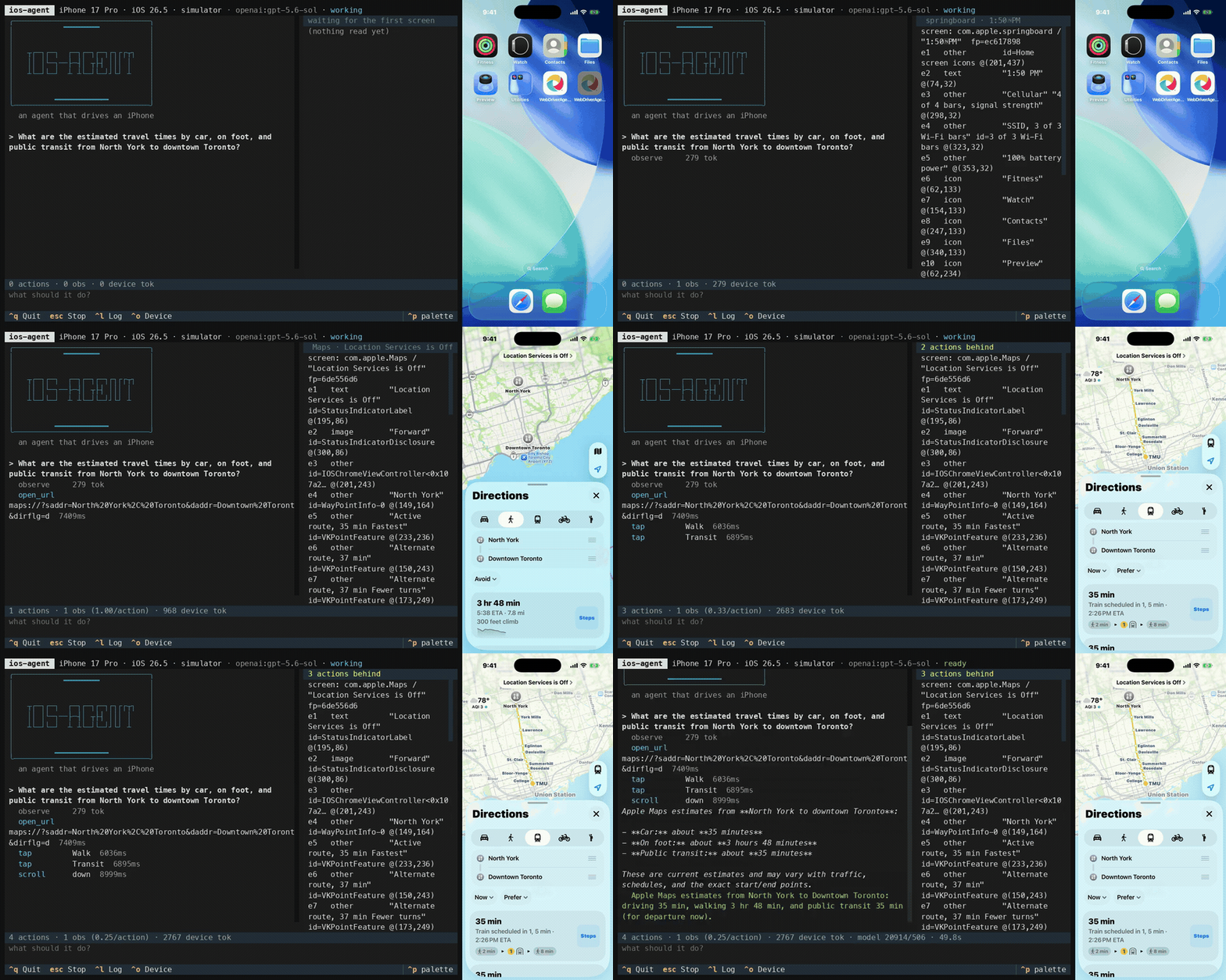
One goal, start to finish, at 2.5x: 4 actions, 1 observation, 2,767 device tokens, 49.8s of real time. The terminal is the agent’s own transcript; the phone is an iOS Simulator being driven by it.
Hand an agent a goal
ios-agent "turn on bold text" and watch it work: reasoning, the screen it reads,
actions and cost, live in the terminal.
Give your MCP client hands
One entry in .mcp.json gives Claude Code, Cursor or any MCP client 31 tools
for a simulator or a phone.
Use your own iPhone
Over a cable or Wi-Fi, verified on an iPhone 17 Pro Max, with anything risky asking first.
Drive it by hand
ios-agent manual needs no API key, and shows exactly what an agent would see
on an app nobody has pointed this at before.
13 tasks, three runs each, against an oracle whose action counts are asserted so they cannot drift. Read the results.
Raw WebDriverAgent page source for a 200-row list runs to roughly 37,000 tokens. Re-reading that after every tap exhausts a context window in a handful of steps.
Perception is budget-aware
Screens arrive as a compact digest, not accessibility XML: 251 raw nodes to 12 elements on a real third-party screen, 50 to 474 tokens per step.
Actions return the screen they produced
Half the round-trips, and a delta when the screen is similar, so a long flow stays cheap.
Resolution runs on the host
Six tiers re-find a stale ref by identity, so a retry costs zero model tokens where a round-trip costs a whole turn.
The gate asks before acting
Send, Pay, Delete, and anything that reaches another person need approval before they happen, while the answer still means something.